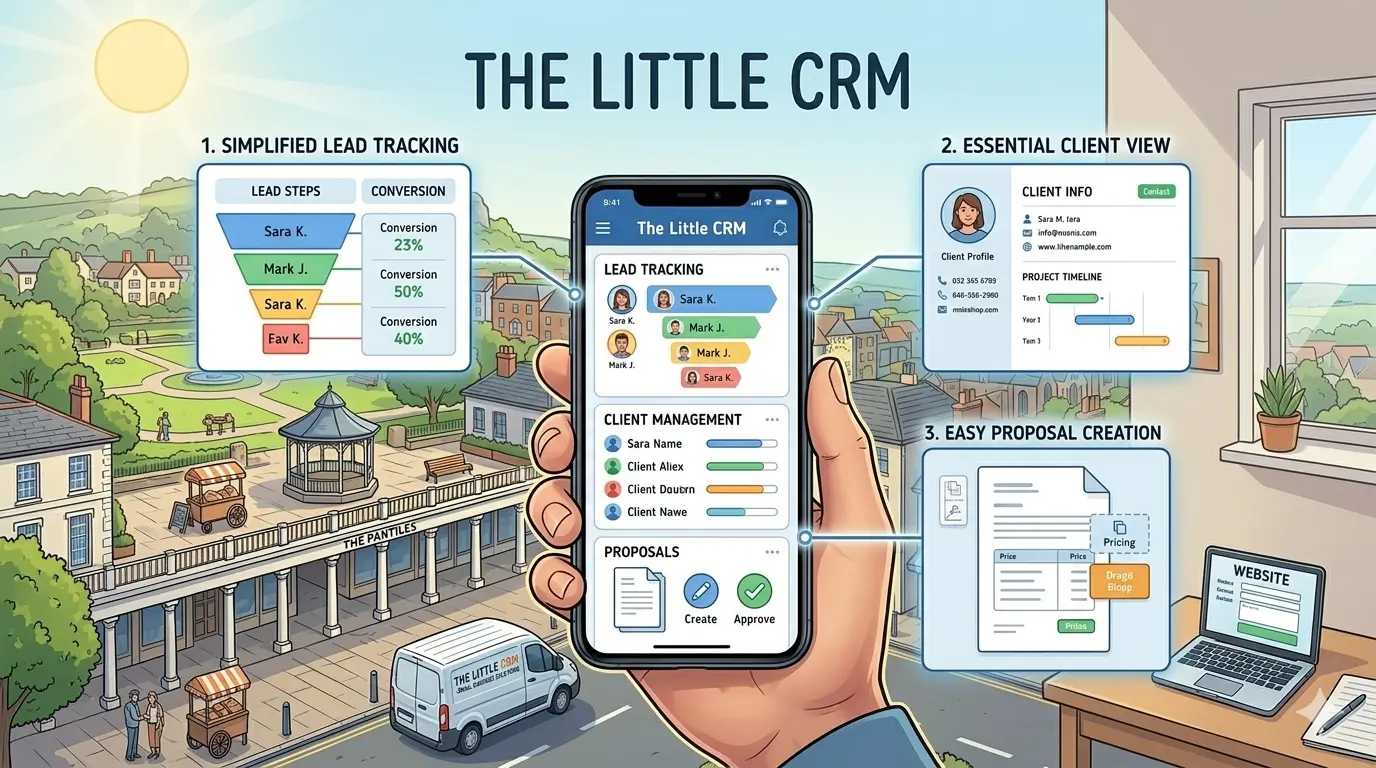
A sales CRM is software that keeps every lead, conversation and deal in one place instead of scattered across WhatsApp chats, a notebook and a spreadsheet, and it shows you exactly where each prospect sits between first contact and a signed client. For a freelancer or a small agency in Pakistan, that one sentence covers most of what the term actually means. The rest of this guide breaks down the pipeline, the stages, the tools worth having, and where teams usually go wrong.
What does CRM mean in sales
CRM stands for customer relationship management, and in a sales context it specifically means tracking every person who might buy from you, from the moment they first show interest to the moment they either become a client or drop out of the process. It is not just a contact list. A contact list tells you who someone is. A sales CRM tells you where they are in your process, when you last spoke to them, and what needs to happen next.
Why this matters more for small teams, not less
A common assumption is that CRM software is for big sales teams with dozens of reps. In practice, the smaller the team, the more a CRM matters, because there is no manager double checking every lead and no backup person who remembers a follow up you forgot. One person running fifteen conversations in their head is exactly the setup where a lead quietly goes cold.
Sales pipeline stages explained
A sales pipeline is just the sequence a lead moves through on the way to becoming a paying client. Most small businesses and agencies in Pakistan use some version of the same five or six stages, even if they call them different names.
New lead
This is anyone who has shown interest but hasn't been contacted yet. A new inquiry from a Google Maps search, a referral, or a form fill all start here.
Contacted
You've reached out, by call, WhatsApp or email, and you're waiting to hear back or have started a conversation. This stage is where most leads quietly die, simply because no one tracked that a reply was overdue.
Qualified
The lead has confirmed they have a real need, a rough budget, and some intent to move forward. Not every contacted lead reaches this stage, and that's normal.
Proposal or negotiation
You've sent a proposal, quote or contract, and you're discussing price, scope or timeline. This is usually the highest value stage to monitor closely, since a proposal that sits unanswered for two weeks rarely closes itself.
Closed won
The lead has signed and become a client. In a well run CRM, this is also the point where the record should convert from a lead into an active client profile, with its own tracking for project status, retainer, and renewal dates.
Closed lost
The lead decided not to move forward. Recording this, and why, is more useful than deleting it, because patterns in lost deals often point to a pricing problem, a messaging problem, or a follow up problem worth fixing.
The sales cycle: how long it actually takes
The sales cycle is the total time a lead spends moving through all of those stages, from first contact to closed won or closed lost. There is no universal number. A freelance designer might close a small project in two or three days. A digital agency pitching a six month retainer might take three to six weeks, especially if it involves a proposal, a revision, and a few rounds of WhatsApp back and forth before signing.
Why tracking your own cycle length is worth doing
Most small businesses in Pakistan have never actually measured their own average sales cycle, they just have a rough feeling for it. Once you track it properly, even for a month, patterns show up fast. If proposals are taking three weeks to close, and every one of your competitors is following up in two days, that gap alone can explain a chunk of lost deals that had nothing to do with your pricing.
What tools a sales CRM actually needs
There is a long list of things a CRM could theoretically do, but for a small Pakistani business or agency, a much shorter list actually matters day to day.
Lead capture and organization
Every new inquiry, whatever the source, needs to land in one place with enough detail to act on it: name, contact info, how they found you, and what they're interested in. If leads are split across a phone's contacts, a WhatsApp chat list and someone's memory, nothing else on this list will help.
Pipeline and deal tracking
A visible pipeline showing how many leads sit at each stage, and how much revenue is tied up in deals that are still open, turns a vague sense of "business is fine" into an actual number you can act on.
Follow up reminders
This is arguably the single most valuable feature in any sales CRM, and the one most often skipped in a spreadsheet. A flag that says this lead is overdue for a follow up catches the exact mistake that kills more small business deals than pricing ever does.
Reporting and visibility
Even basic reporting, how many leads came in this month, how many converted, how long deals are taking, turns guesswork into a pattern you can actually manage, and it's the difference between reacting to a slow month after it happens and seeing it coming three weeks earlier.
Free sales CRM tools versus paid ones
A lot of the tools that show up when searching for sales CRM software offer a free tier, and for a solo freelancer with a handful of leads, that free tier is often genuinely enough. The gap shows up once a second person joins the process, once lead volume grows past what one person can track from memory, or once you need features like an activity log showing who followed up with whom. At that point, the cost of a proper paid plan is usually smaller than the value of a single lead that didn't fall through the cracks.
How The Little CRM handles the pipeline for Pakistani teams
The Little CRM builds the pipeline around exactly the stages described above, new lead, contacted, qualified, proposal, closed won or lost, and adds a few things specifically useful for a small agency or freelance business in Pakistan. Overdue follow ups are flagged directly on the dashboard rather than buried in a report, so nothing needs to be remembered manually. The AI Proposal Writer turns a qualified lead into a short, personalized proposal in seconds, which shortens the exact stage where deals tend to stall. Once a lead closes, it converts into a client profile that tracks project progress, retainer status and invoice dates, so the pipeline and the client relationship live in the same system instead of two separate tools. Pricing stays in PKR, starting at 599 rupees a month, with onboarding handled over WhatsApp by a Lahore based team.
Common mistakes teams make with a sales CRM
- Adding leads but never updating their stage, so the pipeline shows a picture of the business from three weeks ago instead of today.
- Treating the CRM as a place to dump contacts rather than a place to actively work from every day.
- Skipping follow up reminders because they feel unnecessary, until the exact week a hot lead goes quiet and nobody notices.
- Choosing a CRM built for a much bigger sales team, then only ever using ten percent of what it offers, while paying for all of it.
- Never looking at the reporting, even when it's built in, which means the same mistakes repeat every month without anyone noticing the pattern.
Frequently asked questions
What does CRM mean in sales?
CRM stands for customer relationship management. In a sales context, it means tracking every lead and client relationship, from first contact through to a closed deal, in one organized system rather than across scattered notes and chats.
What are the stages of a sales CRM pipeline?
Most small businesses use some version of new lead, contacted, qualified, proposal or negotiation, closed won, and closed lost. Some CRMs rename these stages, but the underlying flow stays the same.
How long is a typical sales cycle?
It varies widely by business. A small freelance project might close in a few days, while an agency retainer with a formal proposal can take three to six weeks. Tracking your own average is more useful than comparing to a generic industry number.
Is a free sales CRM tool enough for a small business?
Often yes, for a solo freelancer with a small number of leads. Once a second team member joins or lead volume grows, most free tools start to feel limited, and a paid plan usually pays for itself quickly.
Does The Little CRM track the full sales pipeline?
Yes. It follows leads from new inquiry through to closed won or lost, flags overdue follow ups automatically, and converts a closed deal directly into a tracked client profile.