A digital marketing agency in Pakistan needs a CRM that tracks campaigns, retainers and deliverables per client, not just a list of contacts moving through a generic sales pipeline. Most CRM software is built around a one time sale, get a lead, close a deal, move on. An agency's real work starts after the deal closes, and it keeps going every month the retainer stays active. This guide covers what agencies actually need to track, where generic CRMs fall short, and how to set up a system that holds up once you have more than a handful of clients.
Why a generic CRM falls short for a marketing agency
Most CRM software was designed for sales teams closing a single transaction. A marketing agency's relationship with a client looks nothing like that, and the mismatch shows up fast once you try to use a generic tool for agency work.
Campaigns aren't one time deals, they're ongoing
A client doesn't just buy SEO once. They pay for it month after month, and the thing worth tracking isn't the sale, it's the progress: rankings moving, GMB reviews coming in, a website redesign hitting its milestones. A pipeline stage like closed won tells you nothing about whether this month's work actually happened.
Retainers add a billing dimension most CRMs ignore
A retainer client pays on a recurring schedule, and an agency needs to know, at a glance, who has paid this month, who is overdue, and whose contract is coming up for renewal. Generic sales CRMs rarely build this in, because it isn't how most of their customers get paid.
Multiple services per client complicate tracking
The same client might have SEO running, a website build in progress, and a social media package starting next month, each with its own status and its own deadline. Tracking all of that inside a tool built for a single deal per contact gets messy fast, usually ending in a side spreadsheet that duplicates half of what the CRM was supposed to replace.
What a marketing agency actually needs to track per client
Strip away everything generic, and a Pakistani digital marketing agency is really trying to keep four things visible for every active client.
SEO and campaign progress
Where rankings stand, what work was done this week, and what's planned next. This is the information a client actually asks about, so it needs to be easy to pull up during a call, not buried across old email threads.
Retainer and invoice status
Whether this month's payment has come in, what the retainer amount is, and when the next invoice is due. A late payment that goes unnoticed for three weeks is a cash flow problem that a simple status flag would have caught immediately.
Contract and renewal dates
When the current agreement ends, and whether a renewal conversation needs to start now or in six weeks. Losing a client simply because nobody flagged the renewal date in time is one of the more avoidable losses an agency can have.
Communication history
What was promised, what was discussed, and when the last real update was sent. When a client calls asking why nothing seems to be happening, a quick look at the activity log should answer that faster than trying to remember.
The client lifecycle for a Pakistani digital marketing agency
A typical agency client moves through a lifecycle that looks a little different from a standard sales pipeline, because the relationship doesn't end at the sale.
Lead
A prospect business found through a Google Maps search showing a weak or missing website, a referral from an existing client, or an inbound inquiry. In Pakistan, GMB based prospecting, finding local businesses with poor reviews or no website, is one of the most common ways agencies generate new leads.
Pitch and proposal
A short, specific proposal covering scope, timeline and retainer amount. Agencies that send a fast, personalized proposal close noticeably more deals than ones where a prospect waits a week for a generic template.
Onboarding
The first two to four weeks, where access, assets and expectations get set. This is also where a lot of trust gets built or lost, since it's the client's first real look at how the agency actually works.
Active management
The ongoing monthly cycle: work gets done, progress gets tracked, and the client gets updated, ideally without having to ask.
Renewal or churn
The contract either renews, often with an upsell into additional services, or the client leaves. Tracking why a client churns, price, results, or simply poor communication, is worth recording every time, because the same reason tends to repeat across lost clients if nobody is watching for it.
Reporting clients actually want to see
Most clients don't want a wall of raw data. They want a short, clear answer to one question: is this working. A monthly report that shows progress in plain terms, what was done, how metrics moved, and what's planned next, does more for client retention than a long technical breakdown most clients will never fully read. Agencies that send this kind of report consistently, every month, without being asked, tend to have noticeably longer client relationships than ones that only report when a client chases them for an update.
How The Little CRM supports agency workflows
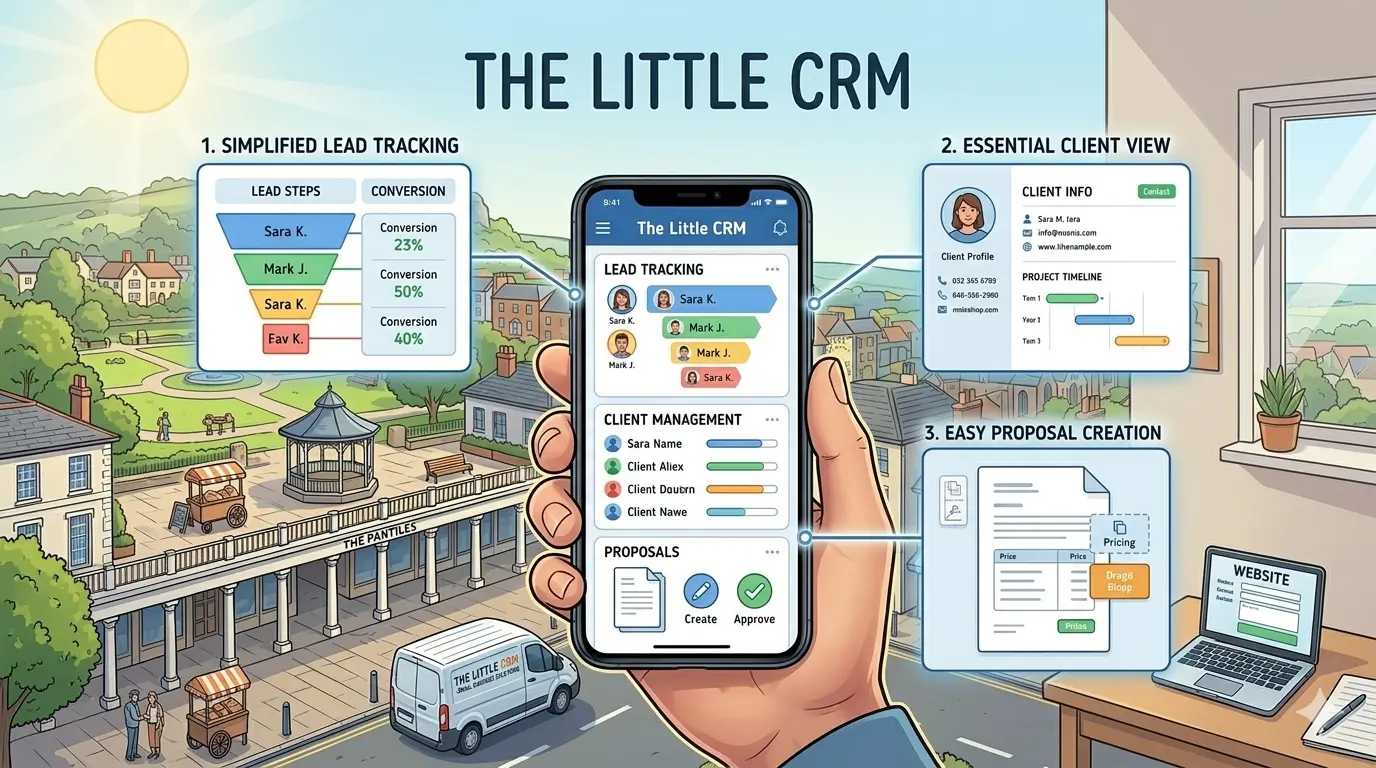
The Little CRM was built around exactly this shape of work rather than a generic sales pipeline. Each client profile tracks SEO progress, web development status, a working percentage, retainer amount, invoice status and contract dates in one place, so there's no separate spreadsheet running alongside the CRM. The Google Maps Lead Finder searches local businesses directly, surfacing ones with missing websites or weak reviews, which is exactly how a lot of Pakistani agencies already prospect, just faster and more organized. The AI Proposal Writer turns a qualified lead into a short, personalized pitch in seconds. Every update, a lead added, a client's progress logged, an invoice marked paid, is recorded automatically in an activity log, so answering a client's question about what happened this month takes seconds instead of a search through old chats. One click generates a printable monthly progress report per client, with progress bars, notes and project details ready to share, covering the exact reporting most clients actually want to see.
Common mistakes agencies make managing clients
- Running client tracking in a spreadsheet alongside the CRM, which means updating two places and eventually trusting neither.
- Only checking in with a client when something goes wrong, instead of sending a short proactive update every month.
- Losing track of contract renewal dates until a client mentions they're considering someone else.
- Treating every client the same in the pipeline, when a retainer client and a one time project client need different kinds of tracking entirely.
- Not recording why a client left, which means the same preventable churn reason keeps repeating without anyone noticing the pattern.
Frequently asked questions
What should a digital marketing agency track for each client?
At minimum, campaign or SEO progress, retainer and invoice status, contract and renewal dates, and a history of communication. These four cover most of what a client will ask about and what an agency needs to manage cash flow and renewals.
Why don't generic CRMs work well for marketing agencies?
Most generic CRMs are built around a single sale closing a deal, while an agency's relationship with a client continues every month through an ongoing retainer, with multiple services and recurring billing that generic pipelines don't account for.
How can an agency find new clients in Pakistan?
Common methods include Google Maps and GMB based prospecting to find local businesses with weak websites or reviews, referrals from existing clients, and direct outreach. Tools that combine lead finding with CRM tracking save the step of moving prospects between separate systems.
What should a monthly client report include?
A short, plain language summary of what was done, how key metrics moved, and what's planned next. Clients generally respond better to a clear, concise update than a long technical report.
Does The Little CRM handle retainers and contract renewals?
Yes. Each client profile tracks retainer amount, invoice status and contract or renewal dates directly, so nothing depends on memory or a separate spreadsheet.