Yes, there is a genuinely free way to run a CRM in Pakistan, but the word free hides a lot of fine print. Most of the big names, HubSpot, Zoho, Bitrix24, all advertise a free plan on the homepage, and then quietly cap the number of contacts, hide the features you actually need behind a paywall, or bill you in US dollars the moment your team grows past two or three people. If you run a small agency, freelance business, or a two person real estate desk in Lahore, Karachi or Islamabad, that gap between the marketing page and the real product matters. This guide walks through what free actually means for a CRM in Pakistan, why the popular global tools often don't fit local budgets or workflows, and what a fair free trial should include before you hand over your leads and client data.
What "free" usually means when a CRM says it
When a CRM company says free, they mean one of three things, and it is worth knowing which one you are getting before you build your workflow around it.
- A permanently free tier with hard limits. HubSpot's free CRM, for example, works well for a very small number of contacts and basic pipeline tracking, but the moment you want real automation, custom reporting, or more than a couple of team seats, you are looking at a paid plan billed in dollars.
- A free trial. Usually 7, 14 or 30 days of full access, after which you either pay or lose most of what you built. This is honest as long as the company tells you clearly when the countdown starts and what happens to your data afterward.
- A freemium trap. The tool looks free, but critical things like exporting your own contact list, adding a second team member, or removing branding are locked behind an upgrade. You find out about the limit exactly when you need it most, usually a few weeks in, once your whole client list is already inside it.
None of these are automatically bad. A permanently free tier is genuinely useful if your business is small enough to live inside its limits forever. A time boxed trial is fine if it is generous enough to actually test the product with real leads. The problem in Pakistan specifically is that almost none of these plans were built with PKR pricing, WhatsApp based onboarding, or a Pakistani support team in mind, which changes how useful "free" actually is day to day.
Why global free CRMs often don't fit a Pakistani small business
A freelancer in Karachi and a marketing agency in Lahore are not the target customer for Salesforce or Zoho's global free tier, even though both companies would happily take a signup from either of them. Three friction points show up again and again.
- Currency and payment. Most global CRMs bill in USD, so every upgrade involves a currency conversion, a foreign transaction fee, and pricing that quietly moves every time the rupee does. A plan that looks like fifteen dollars a month sounds fine until you weigh it against a local retainer in PKR and realize it eats a meaningful slice of a single client's monthly fee.
- Onboarding. Big CRMs are built for self service signup, a getting started email, and a knowledge base you're expected to read yourself. If you're new to CRM software altogether, and plenty of Pakistani small business owners are trying it for the first time, that self service model is a real barrier. A five minute WhatsApp conversation with someone who sets your account up for you is a completely different experience.
- Fit. A global CRM is built to serve everyone from a two person startup to a five thousand person enterprise, so the free tier stays deliberately generic. Features that matter to a Pakistani digital agency, tracking a client's SEO progress, GMB reviews, retainer status and contract renewal date in one place, or a lawyer tracking hearing dates and retainer payments, simply aren't there, because the product was never built around that specific workflow.
None of this means the global tools are bad software. It means the free tier of a global CRM and the actual needs of a small Pakistani business often sit slightly out of alignment, and that gap tends to show up right when you need the tool most.
What a fair free trial should actually include
Before signing up for any free CRM, local or global, check for these:
- Full feature access during the trial. A 30 day trial that blocks half the features is worse than a 7 day trial that gives you everything, because a crippled version of the product teaches you nothing useful.
- No forced credit card at signup. Asking for card details before you've tried anything is usually the first step toward an automatic charge you didn't plan for.
- Clear data ownership. Ask, in plain terms, whether your leads and client records are yours to export if you leave, and whether the company can see or resell that data. A trustworthy vendor answers this directly.
- Local payment and support. A PKR price with no surprise conversion, and a support channel you can actually reach, usually WhatsApp for a Pakistani small business, removes a whole category of friction later.
How The Little CRM's free trial is built
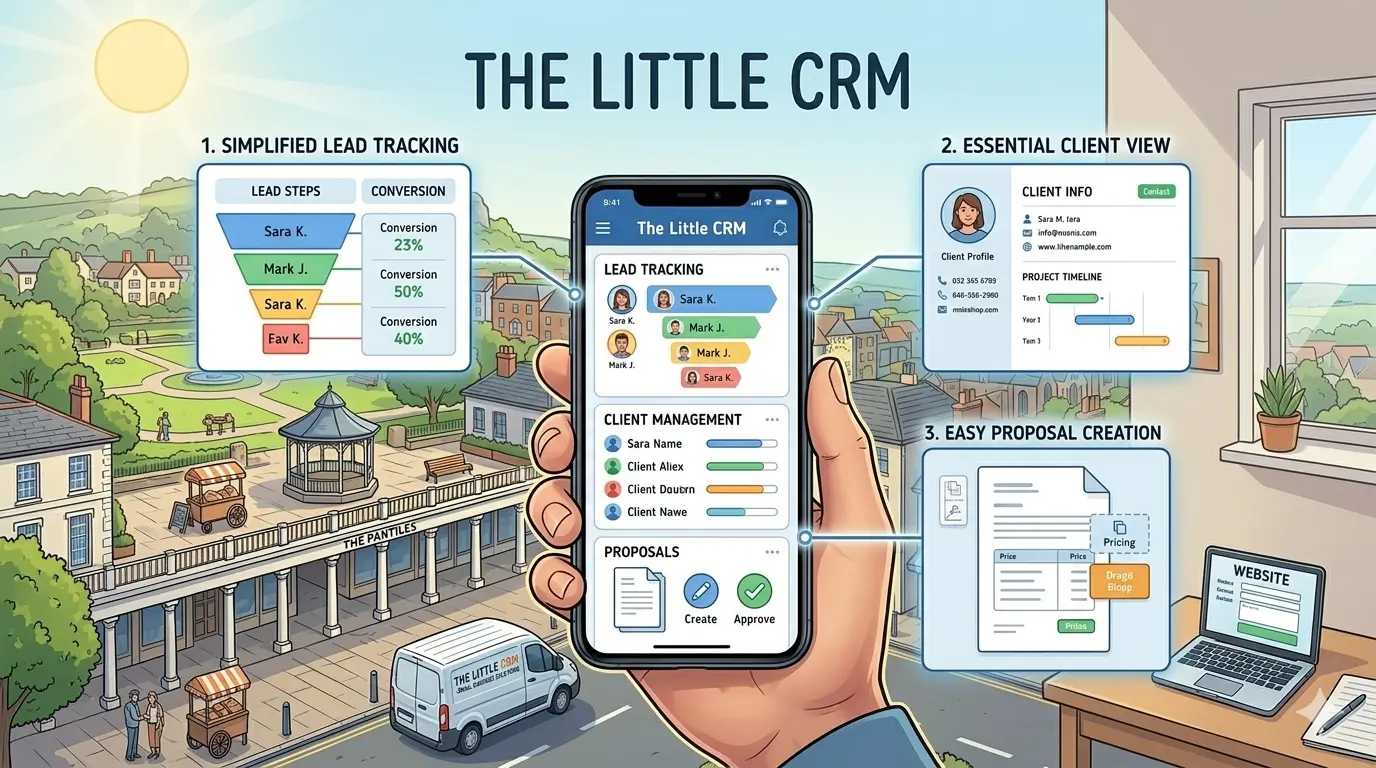
The Little CRM's free trial runs for 7 days with full access to the core product, not a limited preview of it. It includes:
- Unlimited lead and client entries during the trial window
- The AI Proposal Writer, for turning a lead into a sent proposal in seconds
- Follow up alerts, so a hot lead never goes cold because someone forgot to call back
- Fifty leads pre loaded on signup, so there's something real to work with from day one instead of an empty dashboard
- No credit card required to start
- Onboarding over WhatsApp with a Lahore based team, so setup takes closer to an hour than a week
After the trial, pricing moves to PKR 599 a month on the Starter plan or PKR 999 for three months on the Pro plan, both built around what a small digital agency, freelancer, or local business actually tracks day to day: lead source, follow up dates, project progress, retainer and invoice status, rather than a generic sales pipeline borrowed from an enterprise product.
That combination, a genuinely full featured trial, local pricing, and WhatsApp based support, is the specific gap this guide opened with. It isn't that free CRMs don't exist elsewhere. It's that very few of them were actually built with a Pakistani freelancer or small agency's budget, workflow, and support expectations in mind.
Who should stick with a free plan, and who should upgrade
- Solo freelancer with a handful of active clients: a free tier or trial version of almost any CRM will probably cover you for a while, since contact volume stays low.
- Small agency with two or more people touching the same leads: a shared login, follow up reminders, and an activity log showing who did what and when stop being nice to have and start being the difference between a timely follow up and a lead going cold. This is usually where a paid plan, even a cheap one, pays for itself with a single retained client.
- Anyone juggling ten or more active clients across WhatsApp chats, a spreadsheet, and sticky notes: a proper CRM, free or paid, is overdue. A missed follow up or forgotten contract renewal almost always costs more than the software that would have flagged it.
A short checklist before you choose
Run through this list before settling on any CRM, free or paid, for a Pakistani small business, agency or freelance practice:
- Does the price stay in PKR without a currency surprise at checkout?
- Does the free trial give you the real product, not a stripped down demo?
- Can you reach a real person, ideally over WhatsApp, if something breaks or you get stuck?
- Is it clear, in writing, that your leads and client data belong to you?
- Does the tool actually match how you work, retainers and project status for an agency, or hearing dates and case files for a lawyer, rather than a generic sales pipeline that doesn't quite fit?
If a CRM, including this one, can't answer all five clearly, it's worth asking the company directly before you migrate your client list over.
Frequently asked questions
Is there a truly free CRM available in Pakistan?
Yes. The Little CRM offers a 7 day free trial with full features and no credit card required, and several global CRMs like HubSpot offer a permanently free tier with contact and feature limits. Whether either fits depends on how many leads and team members you have.
What's the catch with most free CRM plans?
The usual catches are contact or user limits, key features locked behind a paid upgrade, and pricing in US dollars that becomes expensive once you outgrow the free tier. Reading the limits before signing up avoids a surprise later.
Can a freelancer manage clients well on a free CRM?
Yes, for most solo freelancers a free plan or trial covers lead tracking, basic client records and follow up reminders comfortably, since contact volume stays low.
How long does The Little CRM's free trial last, and what does it include?
Seven days, with full access to lead management, client tracking, the AI Proposal Writer, follow up alerts, and fifty leads pre loaded on signup, no credit card required.
Is my data safe if I try a free CRM?
With The Little CRM, yes. Data is stored in a dedicated MySQL database per account and is never sold or shared. Ask the same question directly of any CRM you're considering before moving real client data into it.